

Table of Contents
- What Third-Party Testing Actually Means for Supplements
- Why Third-Party Certification Matters More Than Organic Labels Alone
- How to Read Supplement Labels for Quality and Certification
- NSF Certified Supplements List and Other Credible Testing Organizations
- Identifying Certification Seals and Understanding Contaminant Screening
- Independent Supplement Review Sites and How to Verify Product Integrity
- Cost-Benefit Analysis: Are Third-Party Tested Organic Supplements Worth It?
- Conclusion
Last Updated: August 18, 2026
What Third-Party Testing Actually Means for Supplements
Third-party tested organic supplements have undergone independent laboratory analysis by organizations separate from the manufacturer. This testing verifies that products contain what the label claims and are free from harmful contaminants like heavy metals, microbial pathogens, and undisclosed synthetic additives.
The distinction matters because supplement manufacturers self-regulate to a significant degree. The FDA oversees the industry but does not pre-approve supplements before they reach shelves the way it does pharmaceuticals. That's where independent laboratory testing enters the picture. A third-party organization tests samples of the finished product, checks potency levels against label claims, screens for adulterants, and documents findings in a report that manufacturers can share with consumers.
What most people miss is that "organic" and "third-party tested" are completely separate certifications. A supplement can be certified organic by the USDA and still contain heavy metals or bacterial contamination. Conversely, a non-organic product can pass rigorous third-party testing. The two certifications address different concerns: organic status confirms the source of ingredients and prohibits synthetic pesticides and genetically modified organisms. Third-party testing confirms the finished product is safe and accurately labeled.
Green Organic Supplements emphasizes this distinction because many customers assume organic certification covers everything. It doesn't. That's why we prioritize products that carry both designations, organic ingredients sourced responsibly, plus independent verification that the final supplement meets strict purity standards.
FDA guidance on dietary supplement regulations
Why Third-Party Certification Matters More Than Organic Labels Alone
Organic certification protects the supply chain but says nothing about what happens during manufacturing or whether contaminants entered the product afterward. A supplement could start with organic herbs and still accumulate lead or cadmium during processing if the facility lacks proper controls.
Third-party testing catches these gaps. Independent laboratories use standardized testing protocols, toxicology screening, microbial analysis, potency verification, and heavy metal detection, to assess the actual product sitting in the bottle. This is where label accuracy gets verified. Many supplements contain less active ingredient than advertised, or more, or sometimes none at all. Testing reveals the truth.
The regulatory compliance piece is also critical. While the FDA doesn't pre-approve supplements, it does hold manufacturers accountable for safety and accuracy. A manufacturer making false claims or selling contaminated products faces enforcement action. Third-party testing creates a paper trail that demonstrates good faith effort to ensure product integrity. It's a liability shield for manufacturers and a trust signal for consumers.
The cost-benefit here tilts heavily toward testing. A contaminated supplement can cause real harm, heavy metal accumulation over months, allergic reactions to undisclosed allergens, adverse interactions with medications. The price premium for third-party tested products is modest compared to the risk of unknowingly consuming a product that hasn't been vetted.
How to Read Supplement Labels for Quality and Certification
Start by looking for the supplement facts panel on the back or side of the bottle. This panel lists the active ingredients, their amounts per serving, and the serving size. The format is standardized, which makes comparison shopping straightforward.
Below the supplement facts, look for a statement of identity, what the product claims to be. Then scan for any third-party certification seals. These appear as logos or marks from recognized testing organizations. Common ones include NSF International, USP (United States Pharmacopeia), ConsumerLab, Informed Choice, and several others. The presence of a seal indicates that organization has tested the product and verified its contents.
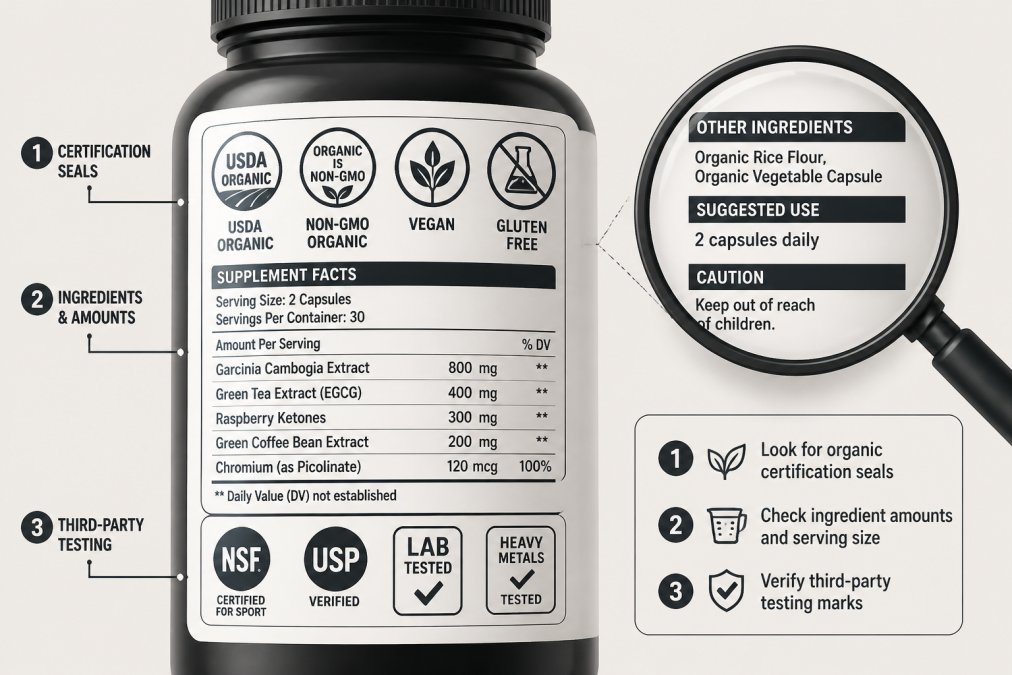
Check the ingredient list for specificity. Quality products list individual ingredients with their amounts. Vague language like "proprietary blend" or "herbal complex" with no breakdown of amounts is a red flag, you can't verify what you're actually getting. Transparent manufacturers list each component clearly.
Look for the manufacturer's name and address. Reputable companies are willing to be identified. If the label is vague about who made the product or where, that's a warning sign about supply chain transparency.
The expiration date matters. Supplements degrade over time, especially if stored improperly. A product close to expiration may have reduced potency. Fresh delivery is one reason Green Organic Supplements prioritizes fast shipping, potency declines the longer a product sits on a shelf.
Finally, scan for allergen statements. Quality manufacturers clearly disclose if a product contains or was processed in a facility with common allergens like soy, gluten, shellfish, or tree nuts. This is essential for people with sensitivities.
NSF Certified Supplements List and Other Credible Testing Organizations
NSF International is one of the most rigorous third-party testing organizations. They test for over 400 contaminants, verify label claims, and audit manufacturing facilities. NSF certification is particularly common in sports supplements, but the standard applies across categories.
USP (United States Pharmacopeia) has been setting standards for pharmaceuticals and supplements since 1820. USP verification means a product was tested for strength, purity, and manufacturing quality. Their standards are stringent, and the USP mark carries significant weight in the industry.
ConsumerLab conducts independent testing and publishes detailed reports on supplement quality. Their website allows consumers to search for specific products and see test results. This transparency is valuable, you can look up a product by name and see whether it passed or failed testing.
Informed Choice focuses on sports supplements and tests for banned substances that could disqualify athletes. Their certification is valuable for anyone concerned about purity.
The Natural Products Association and Quality Assurance International also conduct third-party testing, though with varying levels of rigor. When evaluating a certification seal, research the organization behind it. Not all seals are equal. NSF, USP, and ConsumerLab represent the highest standards.
A practical tip: if a product carries one of these certifications, the manufacturer usually highlights it prominently. If you don't see a seal on the front or back label, check the company's website. Reputable manufacturers provide links to their testing reports. If a company claims third-party testing but can't produce documentation, that's a significant red flag.
NSF International dietary supplement certification standards
Identifying Certification Seals and Understanding Contaminant Screening
Certification seals are logos or marks that indicate a product has passed specific testing. Learning to spot them quickly saves time when shopping. The NSF mark is a circle with "NSF" inside. The USP mark shows "USP Verified" with a distinctive logo. ConsumerLab uses a circular seal with their name. Informed Choice displays a circular logo with a checkmark. These are the most recognizable.
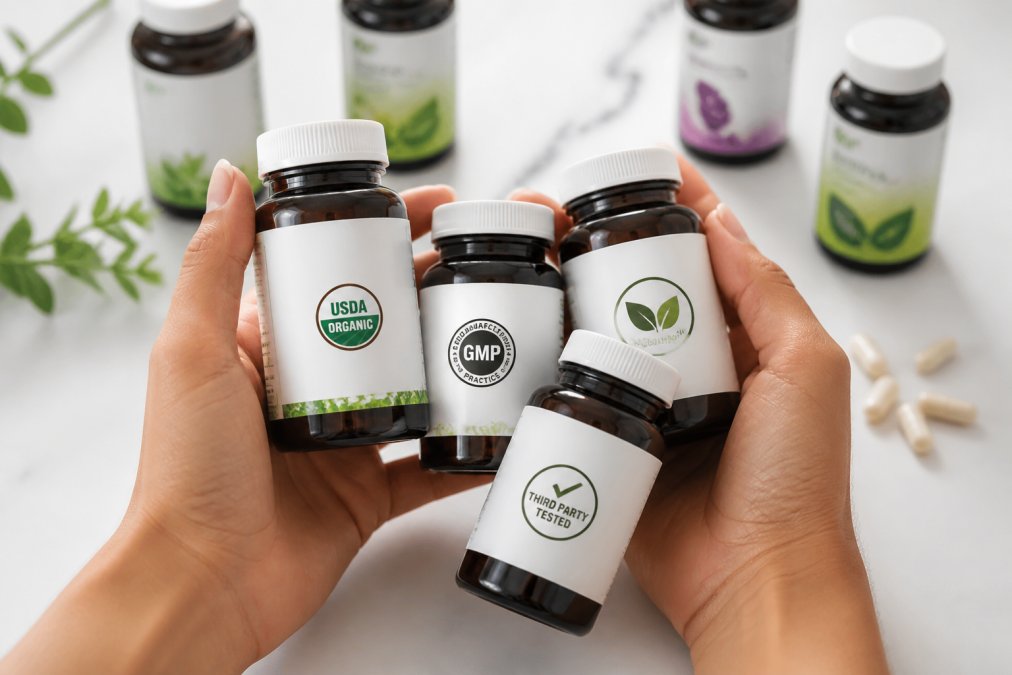
Contaminant screening is the testing process itself. Laboratories analyze supplement samples for heavy metals like lead, cadmium, arsenic, and mercury. They test for microbial contamination, bacteria, mold, and fungi that could cause illness. They verify that synthetic pesticides weren't used during ingredient cultivation. They check for adulterants, undisclosed pharmaceutical ingredients sometimes added to boost perceived effectiveness.
The testing protocols are standardized across reputable organizations. A supplement is tested at multiple points: raw ingredients arrive at the facility, in-process samples during manufacturing, and the finished product before packaging. This multi-stage approach catches contamination that might occur at any step.
Heavy metals accumulation is a particular concern for long-term supplement users. Lead and cadmium don't cause immediate symptoms but build up in bone and tissue over months or years. For older adults taking supplements daily, this risk is real. Third-party testing with documented heavy metal screening is not optional, it's essential.
Microbial testing checks for pathogens that could cause infection. This matters especially for people with compromised immune systems or those taking immunosuppressant medications. A contaminated supplement could trigger serious illness in vulnerable populations.
Independent Supplement Review Sites and How to Verify Product Integrity
Several independent websites publish supplement testing results and reviews. ConsumerLab maintains a searchable database of products they've tested. You can look up a specific brand and see whether it passed or failed, what contaminants were found (if any), and whether the label claim matched the actual content.
ConsumerLab independent supplement testing database
Examine the company's website for transparency. Quality manufacturers publish their third-party testing reports directly on their site or provide links to them. If you can download a PDF showing NSF or USP test results, that's a strong signal. If the company is evasive about providing documentation, move on.
Look for manufacturing facility information. Where is the product made? Does the facility hold FDA registration? Has it passed FDA inspections? Transparent companies provide this information. Vague answers suggest the company isn't confident in its supply chain.
Check customer reviews, but with a critical eye. Online reviews are easy to fake. Look for reviews that mention specific experiences, digestive tolerance, noticeable effects over time, consistency between batches. Reviews that say only "great product" or "highly recommend" without detail are less reliable. Reviews mentioning side effects or batch inconsistency are more credible because they're harder to fabricate.
Verify that the company has been in business for several years. Newer companies sometimes cut corners to build market share quickly. Established companies have reputational incentive to maintain standards.
For people with sensitive stomachs or complex medication regimens, ask whether the manufacturer provides detailed ingredient sourcing and manufacturing information. Green Organic Supplements prioritizes this transparency because we understand that older adults and people managing chronic conditions need to know exactly what they're taking and how it was made.
Cost-Benefit Analysis: Are Third-Party Tested Organic Supplements Worth It?
The honest answer is: it depends on your situation, but for most people the answer is yes.
Third-party tested organic supplements typically cost more than untested alternatives. The testing itself adds cost. Organic ingredient sourcing costs more than conventional. Transparent labeling and documentation require additional effort. These expenses get passed to consumers.
The benefit is certainty. You know what you're getting. You know the product is free from heavy metals, microbial contamination, and undisclosed adulterants. You know the potency matches the label. For people managing chronic conditions, taking supplements daily for months or years, or those with sensitive digestive systems, this certainty has real value.
Consider the alternative costs. If an untested supplement causes an adverse reaction, you face medical bills, lost work time, and potential complications. If it contains less active ingredient than claimed, you're paying for a product that doesn't deliver the intended benefit. If it accumulates heavy metals over months, you face long-term health consequences that are expensive to treat.
For older adults on fixed incomes, budget matters. But skimping on supplement quality is false economy. A slightly more expensive product that actually works and won't harm you is better value than a cheap product that doesn't work or makes you sick.
The timing factor also matters. Organic certification and third-party testing take time. A supplement that's been tested and certified has been vetted. A new product making big claims but lacking certifications hasn't been through that scrutiny yet. The extra months or years a product has been on the market with certifications intact is evidence of safety and efficacy.
| Factor | Untested Supplement | Third-Party Tested Organic |
|---|---|---|
| Label Accuracy | Unknown | Verified |
| Heavy Metal Screening | None | Yes |
| Microbial Testing | None | Yes |
| Manufacturing Audit | None | Usually |
| Organic Certification | Possible | Likely |
| Cost Premium | Baseline | 15-40% higher |
| Health Risk | Moderate to high | Low |
| Long-term Safety | Uncertain | Documented |
For people with chronic pain, inflammation, or conditions requiring long-term supplementation, the cost-benefit clearly favors third-party tested products. The peace of mind alone justifies the premium.
Choosing supplements requires more than checking the price. Third-party tested organic supplements represent the intersection of two critical standards: ingredient quality and product safety. When you're taking something daily to support your health, especially if you're managing chronic conditions or transitioning off medications, you deserve certainty about what's in the bottle.
The certification seals, testing reports, and transparent labeling aren't marketing theater. They're evidence that a manufacturer has invested in your safety. Green Organic Supplements hand-makes supplements in the USA with clean ingredients and prioritizes fast delivery to ensure potency. We back our products with third-party testing because we understand that trust isn't claimed, it's earned through documentation and consistency.
Start by checking labels for NSF, USP, or ConsumerLab certifications. Look up products on independent review sites. Ask manufacturers for their testing reports. These steps take minutes but give you the information you need to make a choice you can feel confident about. Your health is worth the extra attention.
Frequently Asked Questions
What does third-party testing mean for dietary supplements?
Third-party testing means an independent laboratory, separate from the manufacturer, tests the supplement to verify its ingredients match the label, check for contaminants like heavy metals and microbial pathogens, and confirm potency. This independent verification provides consumer protection because the testing organization has no financial stake in the product's sales, making their results more trustworthy than manufacturer-conducted testing alone.
Why is the USDA Organic seal not enough to guarantee supplement purity?
The USDA Organic certification verifies that ingredients were grown without synthetic pesticides or genetically modified organisms, but it does not test for heavy metals, microbial contamination, or label accuracy. Third-party tested organic supplements combine organic sourcing with independent laboratory verification of purity, potency, and the absence of adulterants, offering two layers of quality assurance rather than one.
Which organizations provide credible third-party certification for supplements?
NSF International, USP (United States Pharmacopeia), ConsumerLab, and Informed Choice are among the most recognized independent testing organizations. Each operates different standards and testing protocols. NSF certified supplements list includes products tested for banned substances and contaminants. When selecting a supplement, look for these seals on the label and verify the certification on the organization's website to confirm the product's current status.
How can I verify if my vitamins are free from heavy metals and contaminants?
Check the supplement label for third-party certification seals (NSF, USP, ConsumerLab, or Informed Choice). Visit the certifying organization's website and search for your product by name and manufacturer to confirm it passed contaminant screening for heavy metals, microbial pathogens, and synthetic pesticides. Request a Certificate of Analysis from the manufacturer if you need detailed test results. Independent supplement review sites also publish testing data and batch information.
Are organic supplements always third-party tested?
No. Organic certification and third-party testing are separate standards. A supplement can be USDA Organic without undergoing independent laboratory testing. Conversely, a non-organic supplement may be third-party tested. The most reliable products carry both certifications, they meet organic ingredient standards and have passed independent verification of purity, potency, and safety. Always check the label for both seals to ensure comprehensive quality assurance.
This article was written using GrandRanker