

Table of Contents
- Why Elderly Arthritis Supplements Work Differently for Seniors
- Natural Anti-Inflammatory Supplements for Seniors: The Evidence-Ranked List
- Arthritis Supplement Drug Interactions Seniors Must Know
- Safety and Potential Side Effects of the Best Elderly Arthritis Supplements
- How to Choose a High-Quality Joint Supplement That Delivers Results
- Conclusion
Last Updated: August 7, 2026
Why Elderly Arthritis Supplements Work Differently for Seniors
The best supplements for elderly arthritis are not simply adult supplements taken at a higher dose. Aging fundamentally changes how the body processes, absorbs, and responds to nutrients. Most supplement guides treat arthritis as a single condition and seniors as a uniform group. Both assumptions are wrong. The physiological changes that come with age create distinct absorption challenges, and the supplement evidence base looks quite different when filtered for older adults specifically.
Age-Related Changes That Affect Nutrient Absorption
Stomach acid production declines with age, reducing the body's ability to break down certain compounds. Intestinal motility slows, affecting how consistently nutrients reach the bloodstream. Kidney and liver function, which regulate how the body processes and eliminates supplements, also change with age.
A standard dose listed on a supplement label may not translate to the same serum levels in a 75-year-old as it does in a 45-year-old. Fat-soluble vitamins like Vitamin D depend on adequate fat digestion and bile production, both of which decline over time. This is why bioavailability becomes the most important word in any senior supplement conversation.
Osteoarthritis vs. Rheumatoid Arthritis: Does the Distinction Matter for Supplements?
The distinction matters significantly. Osteoarthritis is a mechanical condition driven by cartilage degradation. Rheumatoid arthritis is an autoimmune response in which the immune system attacks the synovial membrane lining the joints.
Supplements that target cartilage repair, such as glucosamine, chondroitin, and collagen peptides, are primarily relevant to osteoarthritis. Supplements with anti-inflammatory properties, such as omega-3 fatty acids and curcumin, have more theoretical relevance to both types. Knowing which condition you or a loved one has should directly shape which supplements are worth prioritizing.
Natural Anti-Inflammatory Supplements for Seniors: The Evidence-Ranked List
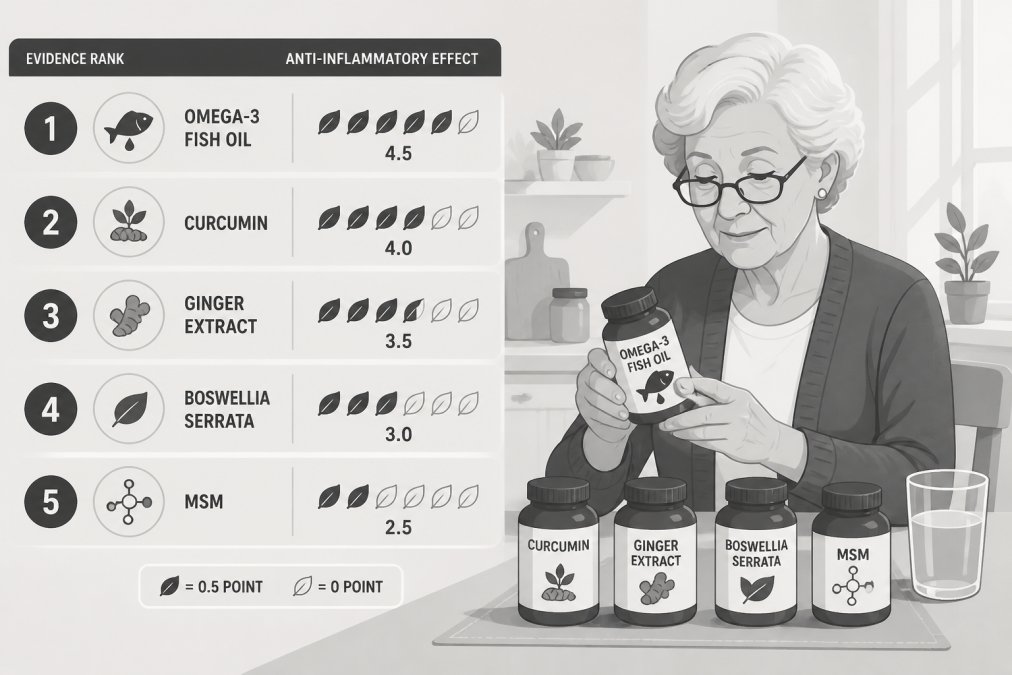
The evidence for joint supplements is genuinely mixed. Some have solid clinical trial support; others have promising but preliminary data. The rankings below reflect the overall strength of evidence combined with practical tolerability for older adults.
Glucosamine and Chondroitin
Glucosamine and chondroitin are the most studied supplements for osteoarthritis and remain the baseline recommendation from most rheumatology practitioners for seniors with knee and hip involvement. Glucosamine is a natural compound found in cartilage; chondroitin helps cartilage retain water and resist compression.
The evidence is strongest for knee osteoarthritis. According to the Arthritis Foundation's supplement guidance, some clinical trials show meaningful improvements in pain and stiffness, particularly in patients with moderate-to-severe symptoms. For seniors, these supplements require consistent use over several months before any effect becomes apparent. Gastrointestinal tolerance is generally good, though shellfish-derived glucosamine is worth flagging for anyone with shellfish allergies.
Omega-3 Fatty Acids and Fish Oil
Omega-3 fatty acids, specifically EPA and DHA, are among the best-supported natural anti-inflammatory supplements for seniors. They work by modulating the body's inflammatory signaling pathways, relevant to both osteoarthritis-related inflammation and the systemic inflammation in rheumatoid arthritis.
Fish oil in triglyceride form is absorbed more efficiently than ethyl ester form, a meaningful distinction for older adults whose digestive function is already reduced. Seniors on blood-thinning medications should note that omega-3s have mild anticoagulant properties, covered in the drug interactions section below.
Curcumin and Turmeric
Curcumin is the active compound in turmeric and has genuine anti-inflammatory properties backed by multiple clinical trials. The problem is bioavailability: standard curcumin powder is poorly absorbed. Enhanced-bioavailability forms, such as those using phospholipid complexes or water-solubilization technology, deliver substantially more curcumin to the bloodstream. For an older adult with reduced digestive efficiency, the difference between a standard turmeric capsule and a properly formulated curcumin extract is significant.
Curcumin also has mild blood-thinning properties and may interact with certain medications.
Boswellia Serrata
Boswellia serrata is a resin extract with well-documented anti-inflammatory properties, specifically through inhibition of certain enzymes involved in joint inflammation. It is particularly noted for its effect on stiffness reduction and joint mobility in osteoarthritis.
One practical advantage for seniors: Boswellia is generally well-tolerated in the gastrointestinal tract. Standardized extracts are important, look for products that specify a percentage of boswellic acids. According to the National Institutes of Health's Office of Dietary Supplements, Boswellia has shown promising results in several clinical trials for osteoarthritis.
Collagen Peptides
Collagen is the primary structural protein in joint cartilage. As we age, the body's ability to produce collagen declines. Hydrolyzed collagen, also called collagen peptides, is broken down into smaller amino acid chains that the body can absorb and potentially use to support cartilage repair.
The evidence for collagen in osteoarthritis is growing, particularly for knee pain and function. Hydrolyzed collagen is better absorbed than whole collagen protein, which matters more for seniors. Undenatured type II collagen works through a different mechanism, modulating the autoimmune response, and has been studied specifically in rheumatoid arthritis with encouraging results.
Vitamin D for Bone and Joint Health
Vitamin D deficiency is common in older adults, particularly those with limited sun exposure. Cholecalciferol (D3) is the preferred supplemental form because it raises serum levels more effectively than D2.
For seniors with arthritis, Vitamin D matters for two reasons. First, it supports calcium absorption and bone density, directly relevant when arthritis pain limits physical activity and accelerates bone loss. Second, it plays a role in immune system regulation, relevant to inflammatory and autoimmune forms of arthritis.
The appropriate dose varies significantly based on baseline serum levels, which can only be determined by a blood test. Excessive intake can lead to toxicity because Vitamin D is fat-soluble and accumulates in the body. A physician-ordered serum test before supplementing is the right starting point.
| Supplement | Primary Mechanism | Best Evidence For | Key Senior Consideration |
|---|---|---|---|
| Glucosamine + Chondroitin | Cartilage support, joint cushioning | Knee osteoarthritis | Allow 3-6 months before judging effect |
| Omega-3 Fatty Acids | Anti-inflammatory signaling | Both OA and RA inflammation | Check for blood-thinner interactions |
| Curcumin | Anti-inflammatory enzymes | Joint pain and stiffness | Choose enhanced-bioavailability form |
| Boswellia Serrata | Enzyme inhibition, stiffness reduction | Osteoarthritis mobility | Good GI tolerability profile |
| Collagen Peptides | Cartilage structural support | Knee OA pain and function | Hydrolyzed form for better absorption |
| Vitamin D (D3) | Bone density, immune modulation | Bone health, inflammation | Test serum levels before dosing |
Arthritis Supplement Drug Interactions Seniors Must Know
This is the section most supplement guides skip, and it is the most important one for older adults. Arthritis supplement drug interactions are not rare edge cases. They are common, predictable, and in some cases serious.
Polypharmacy and the Hidden Risk of Supplement Stacking
Polypharmacy, the concurrent use of multiple medications, affects a large proportion of adults over 65. Many seniors with arthritis are already taking medications for blood pressure, cholesterol, diabetes, or heart conditions. Adding multiple supplements to that regimen creates real interaction risks.
The most clinically significant interactions for arthritis supplements include:
- Blood thinners (warfarin, aspirin, clopidogrel): Omega-3 fatty acids, curcumin, and Boswellia all have mild anticoagulant properties. Combined with prescription anticoagulants, the cumulative effect can increase bleeding risk.
- Diabetes medications: Some supplements, including fish oil at high doses, may affect blood glucose regulation.
- Immunosuppressants (used in RA treatment): Supplements with immune-modulating effects, including Vitamin D and curcumin, may theoretically interact with medications like methotrexate or biologics.
- Statins: CoQ10 depletion is a known side effect of statin medications, adding to interaction complexity when seniors take multiple supplements.
When to Consult Your Doctor Before Starting a New Supplement
Consult your physician or pharmacist before starting any new supplement if you take anticoagulants, immunosuppressants, diabetes medications, thyroid medications, or any medication with a narrow therapeutic window. Bring a complete list of every supplement you currently take to each medical appointment. Many physicians do not ask about supplements proactively, and patients often do not volunteer the information because they assume "natural" means "safe."
Safety and Potential Side Effects of the Best Elderly Arthritis Supplements
The best supplements for elderly arthritis have favorable safety profiles when used appropriately, but "generally safe" does not mean "side-effect free," particularly for older adults.
Common side effects by supplement category:
- Glucosamine and chondroitin: Mild gastrointestinal upset, nausea, and diarrhea. Shellfish-derived glucosamine is contraindicated for those with shellfish allergies.
- Omega-3 fatty acids: Fishy aftertaste and burping are most common. At higher doses, there is a theoretical increased bleeding risk.
- Curcumin: Generally well-tolerated at standard doses. High doses may cause digestive discomfort. Piperine added to enhance absorption can increase the absorption of certain medications.
- Boswellia: Occasional gastrointestinal discomfort. Rare cases of skin reactions have been reported.
- Collagen peptides: Well-tolerated overall. Possible mild digestive upset.
- Vitamin D: Toxicity from excessive supplementation is a real concern. Symptoms include nausea, weakness, kidney problems, and hypercalcemia. Testing serum levels before supplementing is important.
Long-term safety data for most joint supplements is limited. Use the lowest effective dose and review supplementation regularly with a healthcare provider.
How to Choose a High-Quality Joint Supplement That Delivers Results
Knowing how to choose a high-quality joint supplement is arguably more important than knowing which ingredients to look for. The supplement industry in the United States is regulated differently from pharmaceuticals. The FDA does not require pre-market approval for dietary supplements, which means product quality varies dramatically across brands.
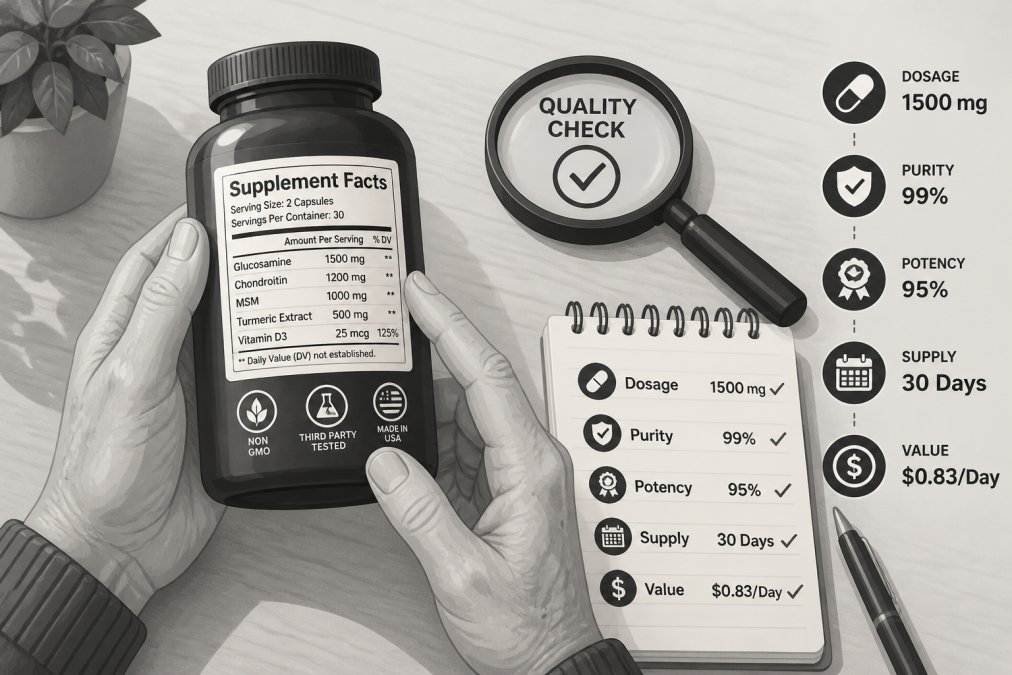
The single most important filter when evaluating any supplement is third-party testing. Without it, the label is essentially unverified.
Third-Party Testing and Certifications to Look For
Third-party testing means an independent laboratory has verified that the supplement contains what the label claims, in the amounts stated, without prohibited contaminants.
Certifications to look for include:
- USP Verified: Tests for ingredient identity, potency, purity, and manufacturing quality
- NSF International: Widely recognized third-party certification covering contaminant testing and label accuracy
- Informed Sport / Informed Choice: Signals rigorous testing protocols
- CGMP Compliance (Current Good Manufacturing Practices): Required by the FDA, but the degree of adherence varies
According to the FDA's guidance on dietary supplement regulations, manufacturers are responsible for ensuring their products are safe and properly labeled, but independent verification through third-party testing adds a layer of accountability that self-certification does not.
At Green Organic Supplements, our formulations are hand-made in the USA using clean ingredients, and our commitment to quality control is central to how we operate. For seniors and caregivers who are rightly skeptical of "organic" and "clean" claims, the question to ask any supplement provider is direct: what third-party testing do you use, and can you show the documentation?
Cost-Benefit Analysis for Seniors on Fixed Incomes
The economics of supplementation matter. Many seniors are managing health costs on fixed incomes, and the supplement market includes many price points that do not always correlate with quality.
A practical framework for evaluating cost versus benefit:
- Prioritize by evidence strength. Glucosamine/chondroitin and omega-3 fatty acids have the strongest evidence base. Start there before adding more expensive or less-studied options.
- Avoid redundant formulations. Many combination products charge a premium for bundling ingredients you could source separately at lower cost.
- Account for bioavailability in the price comparison. A less expensive curcumin supplement that delivers poor absorption may cost more per effective dose than a higher-priced formulation with enhanced bioavailability.
- Consider subscription versus single-purchase options. Pricing depends on quantity, dates, and delivery. Visit the Green Organic Supplements website for current prices.
For caregivers purchasing for an elderly parent or relative, focus on two or three well-evidenced, high-quality supplements consistently rather than taking six mediocre ones sporadically.
Arthritis pain in older adults deserves more than a generic supplement list. The physiological realities of aging, the complexity of polypharmacy, and the quality gaps in the supplement market all demand a more careful approach. Green Organic Supplements offers hand-made, clean-ingredient formulations crafted in the USA, with fast delivery designed to make consistent daily supplementation genuinely manageable. For seniors and caregivers ready to take a more intentional approach to joint health, visit Green Organic Supplements and shop our full range of organic vitamins and natural supplements.
Frequently Asked Questions
What is the best natural supplement for arthritis pain in seniors?
No single supplement works for every senior, but glucosamine and chondroitin, omega-3 fatty acids, curcumin, and Boswellia serrata have the strongest clinical trial support for reducing joint pain and stiffness in older adults. The right choice depends on your arthritis type, current medications, and how well your digestive system absorbs nutrients. Seniors with osteoarthritis often see the most consistent benefit from glucosamine and chondroitin combined, while those with general joint inflammation frequently respond well to omega-3s or standardized curcumin extracts.
Are joint supplements safe for elderly patients taking other medications?
Many elderly arthritis supplements are well-tolerated, but interactions are a real concern for seniors managing multiple prescriptions. Omega-3 fatty acids and curcumin can amplify the effects of blood thinners like warfarin. Glucosamine may affect blood sugar control in people on diabetes medications. Vitamin D at high doses can interact with thiazide diuretics. Always review your full medication list with a pharmacist or physician before adding any new supplement, especially if you are managing three or more prescriptions simultaneously.
Does glucosamine and chondroitin actually work for arthritis?
The evidence is mixed but leaning positive for a specific group. Large clinical trials, including the NIH-funded GAIT study, found that glucosamine and chondroitin together provided meaningful pain relief for people with moderate-to-severe knee osteoarthritis, though results were less clear for mild pain. Benefits typically take six to twelve weeks to appear. The combination appears most effective for cartilage cushioning and slowing cartilage degradation rather than providing immediate pain relief. Seniors should set realistic expectations and give the combination at least three months before evaluating results.
Which vitamins are essential for elderly joint health?
Vitamin D is the most critical vitamin for elderly joint health because it supports calcium absorption, maintains bone density, and helps regulate the immune response linked to joint inflammation. Many seniors over 65 have insufficient serum levels due to reduced sun exposure and age-related absorption challenges. Cholecalciferol, the D3 form, is generally better absorbed than D2. Beyond vitamin D, omega-3 fatty acids from fish oil and the amino acids in hydrolyzed collagen also support joint tissue integrity, though they are classified as supplements rather than vitamins.
Can turmeric and ginger help with chronic arthritis pain?
Turmeric's active compound, curcumin, has documented anti-inflammatory properties supported by multiple clinical trials showing reductions in joint pain and stiffness comparable to low-dose NSAIDs in some studies. Standard turmeric powder has very low bioavailability, so seniors should look for standardized extracts using absorption-enhancing technology such as piperine or phospholipid complexes. Ginger has preliminary evidence for mild anti-inflammatory effects, but the research base is smaller. Both are generally well-tolerated at typical supplement doses, though curcumin can interact with blood thinners.
When should a senior consult a doctor before starting arthritis supplements?
A doctor's review is essential before starting any new supplement if you take prescription blood thinners, immunosuppressants, diabetes medications, or diuretics. You should also consult your physician if you have kidney or liver disease, are scheduled for surgery within two weeks, or are currently managing an autoimmune condition like rheumatoid arthritis with disease-modifying drugs. Even supplements labeled as natural can affect drug metabolism. Bring a complete list of everything you take, including over-the-counter medications, to that conversation.
This article was written using GrandRanker