

Table of Contents
- How Synthetic Vitamins Differ From Food-Based Nutrients
- Side Effects of Synthetic Vitamins on the Digestive System
- Why Synthetic Vitamins Disrupt the Gut Microbiome
- Individual Gut Sensitivity and Transition Strategies
- Best Time to Take Vitamins for Digestion
- How to Choose a Gentle Multivitamin
- Conclusion
Last Updated: August 10, 2026
How Synthetic Vitamins Differ From Food-Based Nutrients
Synthetic vitamins are laboratory-manufactured compounds designed to replicate the chemical structure of nutrients found in whole foods. The critical difference is not just what they contain, but how your body recognizes and processes them. Whole food nutrients arrive packaged with cofactors, enzymes, and companion compounds that your digestive system expects. Synthetic isolates arrive alone.
Bioavailability and Chemical Structure
Bioavailability is the proportion of a nutrient your body actually absorbs and uses after ingestion. Many synthetic vitamins are produced as isolated chemical forms that differ structurally from their food-based counterparts. Synthetic vitamin E is typically produced as dl-alpha-tocopherol, a racemic mixture of eight stereoisomers, while natural vitamin E from food is d-alpha-tocopherol, a single stereoisomer your body's transport proteins recognize more readily. According to Office of Dietary Supplements at the National Institutes of Health, the body absorbs natural-form vitamin E roughly twice as efficiently as the synthetic version.
When your gut encounters a compound it cannot efficiently process, gastrointestinal distress often results. The unabsorbed fraction sits in the digestive tract longer, potentially irritating the gut lining or drawing water into the intestine, contributing to diarrhea or abdominal pain.
Excipients, Fillers, and Binders: The Hidden Ingredients
Excipients are inactive ingredients added to supplements to improve shelf life, texture, flow during manufacturing, or tablet cohesion. Common excipients include magnesium stearate, silicon dioxide, titanium dioxide, carrageenan, and artificial colorants. Many people react not to the vitamin compound itself but to these chemical additives.
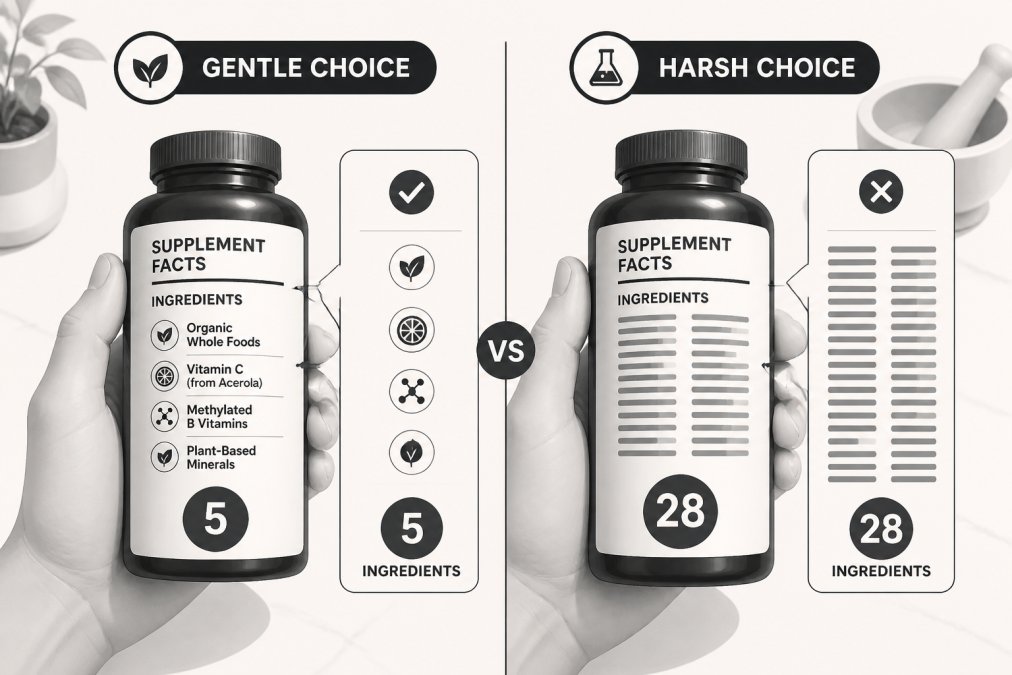
Carrageenan, a common binder derived from red seaweed, has been associated with intestinal inflammation in some individuals. As documented in research published by the National Center for Biotechnology Information, carrageenan can disrupt gut barrier function and trigger an immune response in sensitive individuals. If you've switched vitamin brands and your symptoms changed, the excipients are often the first variable worth examining. Shorter ingredient lists with recognizable components signal quality.
Side Effects of Synthetic Vitamins on the Digestive System
The most common side effects of synthetic vitamins are nausea, abdominal pain, diarrhea, constipation, and acid reflux. These symptoms follow predictable patterns based on which vitamin you're taking, in what form, and when.

Understanding why symptoms occur often reveals a straightforward fix.
Fat-Soluble vs. Water-Soluble Vitamin Risks
Fat-soluble vitamins (A, D, E, K) and water-soluble vitamins (B vitamins and vitamin C) create different risk profiles in the digestive system.
Fat-soluble vitamins are stored in body fat and liver tissue. Because the body cannot easily excrete excess amounts, they accumulate. High doses of synthetic vitamin A can cause hypervitaminosis A, producing nausea, abdominal pain, and in severe cases, liver damage. Vitamin D toxicity causes hypercalcemia, leading to nausea, vomiting, and weakness. The therapeutic index for fat-soluble vitamins is narrower, meaning the gap between a beneficial dose and a harmful one is smaller.
Water-soluble vitamins are generally excreted in urine when consumed in excess. However, synthetic forms at high doses still cause digestive issues before they leave the body. Synthetic vitamin C as ascorbic acid is highly acidic and causes osmotic diarrhea at doses above what the gut can absorb at once. High-dose synthetic B3 (niacin) causes flushing and nausea. Synthetic B6 at excessive doses has been linked to nerve-related symptoms over time.
Fat-soluble vitamins carry toxicity risk from accumulation, while water-soluble vitamins cause acute gastrointestinal distress at high single doses.
How Dosage Drives Gastrointestinal Distress
Dosage is the single most controllable variable in supplement-related digestive problems. Many over-the-counter synthetic multivitamins contain doses far exceeding the Recommended Dietary Allowance because manufacturers assume a percentage will not be fully absorbed. The consequence is that your gut receives a concentrated chemical load it wasn't designed to handle at once.
The gut has finite absorption capacity for each nutrient. When that capacity is exceeded, the remainder stays in the intestinal tract, where it can irritate the mucosa, alter osmotic pressure, or interact with gut bacteria in ways that produce gas and cramping. Splitting doses, taking supplements with food, and choosing lower-potency formulations are the three most effective adjustments before abandoning a supplement entirely.
| Vitamin Type | Common Digestive Side Effect | Primary Risk Factor |
|---|---|---|
| --- reliant on the brand's specific formulation and individual response.--- | ||
| Vitamin A (synthetic) | Nausea, abdominal pain | Accumulation, hypervitaminosis |
| Vitamin C (ascorbic acid) | Diarrhea, acid reflux | High single-dose osmotic effect |
| Vitamin D (synthetic) | Nausea, weakness | Hypercalcemia from toxicity |
| Iron (ferrous sulfate) | Constipation, nausea | Mucosal irritation |
| Niacin (B3 synthetic) | Flushing, nausea | Vasodilatory reaction |
| Zinc (synthetic) | Nausea, stomach cramps | Mucosal irritation at high dose |
Why Synthetic Vitamins Disrupt the Gut Microbiome
The gut microbiome is a community of trillions of microorganisms that regulate digestion, immune response, and nutrient absorption. Synthetic vitamins interact with this ecosystem in ways most supplement articles don't acknowledge.
Several excipients found in synthetic supplements have demonstrated antimicrobial properties. Titanium dioxide nanoparticles, used as a whitening agent in many coated tablets, have been studied for cytotoxic and genotoxic effects on intestinal cells. The European Food Safety Authority's assessment on titanium dioxide raised concerns significant enough that the EU moved to restrict its use as a food additive.
Artificial sweeteners added to chewable or gummy vitamins, particularly sucralose and sorbitol, are known to alter gut microbiota composition in some individuals. Sorbitol is a sugar alcohol that the small intestine absorbs poorly, causing diarrhea at moderate doses. Repeated exposure to these chemical additives may gradually shift the balance of beneficial bacteria, contributing to longer-term digestive sensitivity rather than just acute symptoms after a single dose.
Individual Gut Sensitivity and Transition Strategies
Individual gut sensitivity profiles vary considerably based on genetics, existing microbiome composition, digestive enzyme production, and prior history of gut inflammation. Some people have reduced production of specific digestive enzymes, meaning certain nutrient forms require more processing than their gut can efficiently provide. Others have compromised gut barrier function from prior antibiotic use, chronic stress, or inflammatory conditions.
A common mistake is introducing a new supplement at full dose immediately. This overwhelms a sensitive gut before it has time to adapt.
A practical transition strategy:
- Start at half the recommended dose for the first two weeks
- Take supplements with a meal containing healthy fats, particularly for fat-soluble vitamins
- Introduce one new supplement at a time, not several simultaneously
- Track symptoms in a simple log: timing, severity, what you ate, and the dose
- Increase to full dose only after two weeks with no adverse reactions
- If symptoms persist at half dose, examine the excipient list before assuming the vitamin itself is the problem
Best Time to Take Vitamins for Digestion
The best time to take vitamins for digestion is with meals, specifically with the largest meal of the day. Food buffers the stomach acid environment, slows gastric emptying, and provides the dietary fat that fat-soluble vitamins require for absorption. Taking a synthetic multivitamin on an empty stomach concentrates all the chemical load in an unprotected stomach lining.
Specific timing considerations by vitamin type:
- Fat-soluble vitamins (A, D, E, K): Take with a meal containing fat. Absorption without fat is poor and the unabsorbed fraction contributes to irritation.
- B vitamins: Best taken in the morning with breakfast. They support energy metabolism and can interfere with sleep if taken late.
- Vitamin C: Split the dose if taking more than 500mg. A single large dose of ascorbic acid on an empty stomach reliably causes acid reflux.
- Iron: Taking it with a small amount of food and vitamin C improves absorption while reducing irritation.
- Magnesium: Evening is generally best. It supports muscle relaxation and sleep, and its mild laxative effect is less disruptive overnight.
How to Choose a Gentle Multivitamin
Choosing a gentle multivitamin starts with reading the inactive ingredients list, not just the nutrient panel. The excipient list on the back is where the real differences between products appear.
Green Organic Supplements provides a premium selection of hand-made organic vitamins and natural supplements, crafted in the USA with clean ingredients to support your health and wellness journey. Our commitment to care and quality ensures you receive the best possible support for your body, helping you achieve your wellness goals with ease and confidence.
Label Red Flags to Watch For
These are the specific ingredients worth avoiding if you have a sensitive gut:
- Magnesium stearate in large amounts: a flow agent that some research suggests may affect nutrient absorption
- Titanium dioxide: a whitening agent with emerging concerns about intestinal cell effects
- Carrageenan: a binder linked to intestinal inflammation in sensitive individuals
- Sorbitol or mannitol: sugar alcohols that cause osmotic diarrhea at moderate doses
- Artificial colorants (Red 40, Yellow 5, Blue 1): associated with adverse reactions in sensitive individuals
- Synthetic vitamin E listed as dl-alpha-tocopherol: the less bioavailable racemic form
- Folic acid rather than methylfolate: some individuals with MTHFR gene variants cannot convert folic acid efficiently
When to Consult a Healthcare Professional
Persistent digestive symptoms after adjusting timing, dose, and formulation warrant professional consultation. Specifically, consult a physician or registered dietitian if:
- Symptoms include blood in stool, significant unexplained weight loss, or persistent vomiting
- Digestive distress continues after two to four weeks of dose adjustment
- You are managing a chronic condition and considering transitioning away from prescription medications
- You are taking medications that may interact with specific nutrients (certain blood pressure medications interact with potassium; statins interact with CoQ10; blood thinners interact with vitamin K)
- You are over 65, as metabolic pathways and digestive enzyme production change with age
The U.S. Food and Drug Administration's guidance on dietary supplement interactions provides a useful reference for understanding how supplements may interact with common medications. Mineral competition is also worth discussing with a provider: calcium and magnesium compete for absorption, as do iron and zinc. Taking these simultaneously in synthetic form at high doses reduces the effectiveness of both.
Digestive issues from synthetic vitamins are common but not inevitable. The cause is usually a combination of isolated chemical forms the gut processes less efficiently, excipients that irritate the intestinal lining, high doses that exceed the gut's absorption capacity, and poor timing. Addressing any one of these variables often resolves the problem. Green Organic Supplements provides a premium selection of hand-made organic vitamins and natural supplements, crafted in the USA with clean ingredients to support your health and wellness journey. We deliver trusted quality and fresh products directly to your doorstep with fast delivery, making it simple for you to maintain your daily regimen and experience better health. Shop All supplements at Green Organic Supplements and find a formulation your gut can actually tolerate.
Frequently Asked Questions
Are synthetic vitamins harder for the body to digest than food-based vitamins?
Synthetic vitamins are often isolated chemical compounds that lack the co-factors naturally present in whole foods. Without those co-factors, your digestive enzymes and gut barrier function have to work harder to process them. Many people experience nausea, bloating, or abdominal pain as a result. Food-based nutrients arrive packaged with enzymes and phytonutrients that support absorption, making them easier on the stomach for most adults, particularly those with sensitive digestion.
Which vitamins are most likely to cause stomach upset?
Iron, zinc, and magnesium in synthetic isolate form are among the most common culprits for gastrointestinal distress. Fat-soluble vitamins like A, D, E, and K can accumulate in tissue and cause adverse reactions including nausea when taken in high doses. Synthetic vitamin C in large amounts frequently causes diarrhea. B vitamins, especially niacin, can trigger flushing and stomach discomfort. The form of the nutrient and the dose both determine how much digestive upset you experience.
Can taking vitamins on an empty stomach cause digestive distress?
Yes. Fat-soluble vitamins require dietary fat for absorption, so taking them without food reduces their bioavailability and can irritate the stomach lining. Water-soluble vitamins taken on an empty stomach, particularly iron and high-dose vitamin C, are a common cause of nausea and abdominal pain. Taking supplements with a meal that contains some healthy fat improves nutrient absorption and significantly reduces the risk of stomach upset for most people.
How do synthetic fillers and binders affect gut health?
Many synthetic supplements contain excipients such as magnesium stearate, titanium dioxide, artificial dyes, and cellulose coatings. Some of these additives have been associated with gut barrier disruption and changes to the gut microbiome in research settings. For adults with sensitive digestive systems or existing inflammation, these chemical additives can trigger reactions that have nothing to do with the active vitamin itself. Choosing supplements with clean, minimal ingredient lists reduces this risk considerably.
This article was written using GrandRanker